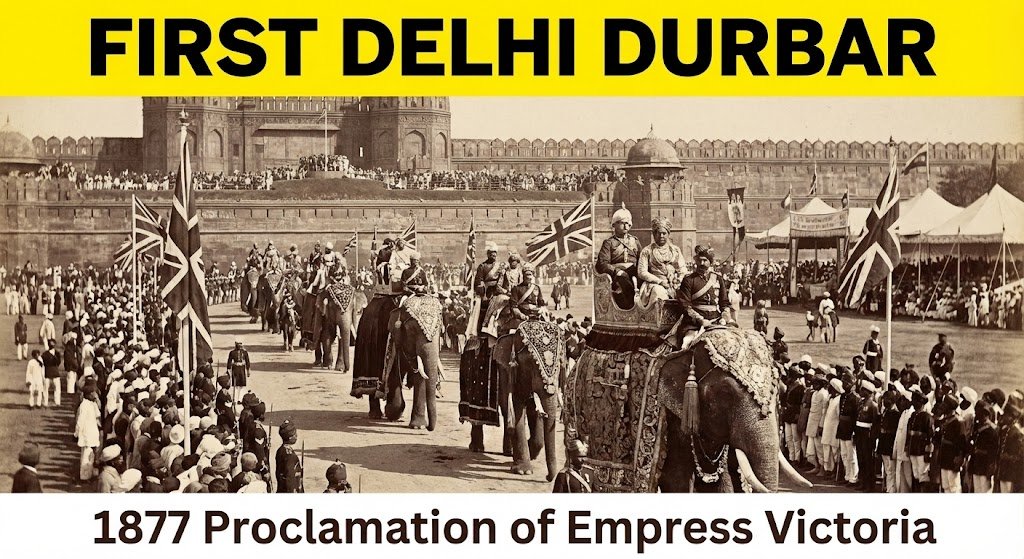
For history students and quiz enthusiasts grappling with the timeline of the British Raj, the specific dates of the Imperial assemblages can be confusing. To answer the specific historical query: The first of the three Delhi Darbar was held in the 19th century by the British.
Specifically, the event took place on January 1, 1877.
The 1877 Proclamation Durbar
Organized by the then Viceroy, Lord Lytton, this grand event was not just a celebration; it was a calculated political statement. The primary purpose was to proclaim Queen Victoria as the Kaiser-i-Hind or Empress of India.
This transferred the control of India formally and symbolically from the East India Company (which had effectively ended in 1858) to the British Crown, establishing a direct imperial lineage.
A Spectacle Amidst Tragedy
While the Durbar was a dazzling display of pomp, featuring indigenous princes, noblemen, and British officers in full regalia, it remains a controversial event in Indian history.
The 1877 Durbar was held during the backdrop of the Great Famine of 1876–1878, which devastated southern and western India. While millions faced starvation, the British administration spent exorbitant amounts of money on the feast and celebrations in Delhi. This stark contrast sparked early nationalist sentiments among Indian intellectuals and leaders.
The Other Two Durbars
To provide full context on why this was the “first of three”:
- First Durbar (1877): 19th Century. Proclaimed Queen Victoria as Empress.
- Second Durbar (1903): 20th Century. Held by Lord Curzon to proclaim King Edward VII as Emperor. Considered the most extravagant of the three.
- Third Durbar (1911): 20th Century. The only one attended by the monarch himself, King George V. This is where the shifting of the capital from Calcutta to Delhi was announced.
So, if asked about the century of the first Durbar, the answer is unequivocally the 19th Century (1877).



Leave a Reply